HCRDI Advances High-Value Coal Gangue Utilization Through Technology and Large-Scale Projects
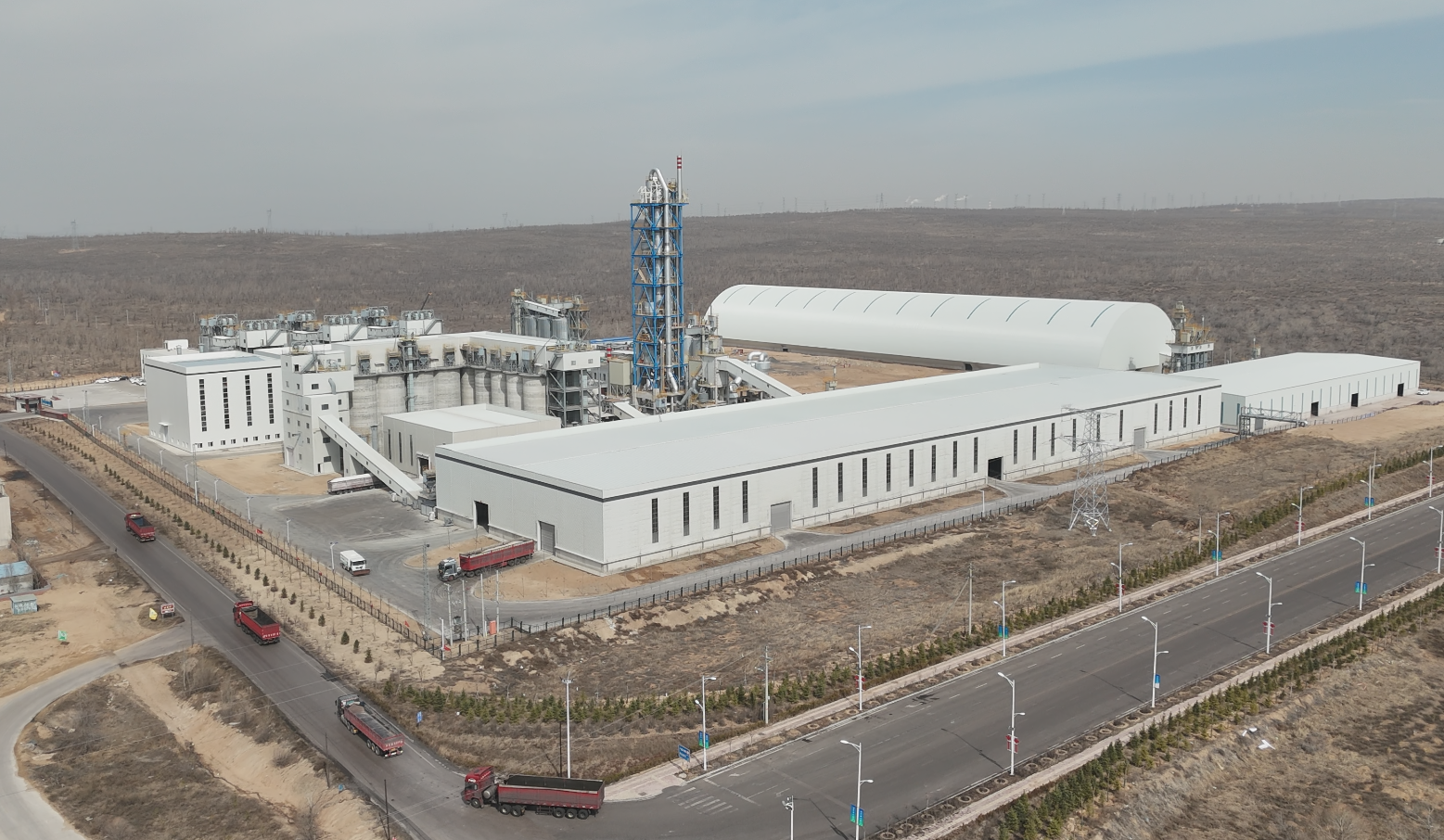
On May 25, 2026, HCRDI received a letter of appreciation from its strategic partner, Inner Mongolia Tianhao New Materials Technology Co., Ltd., recognizing the two companies’ achievements in developing technologies and delivering large-scale projects for the high-value utilization of coal-based solid waste.
Since establishing their partnership in 2024, HCRDI and Inner Mongolia Tianhao have focused on the cascade development and high-value utilization of coal gangue resources in the Yellow River Basin. Their joint efforts have produced breakthroughs in several critical technologies and supported the development of multiple large-scale industrial production lines, establishing a practical pathway for converting coal-associated mineral waste into marketable materials.
From Technical Development to Industrial Application
The two companies’ technical teams have worked together to address several long-standing industry challenges. Key advances include suspension calcination for thermal activation, cascade waste-heat recovery across different temperature levels, and multi-stage classification of ultrafine coal-series kaolin.
These technologies have been successfully incorporated into industrial-scale production lines, delivering stable operation, improved energy performance and consistent product quality. More importantly, their application demonstrates how technologies developed for coal gangue utilization can be scaled up from process design to continuous industrial production.
In December 2024, a production line designed to process 200,000 tonnes of coal gangue annually into metakaolin was successfully commissioned. The project has created a new source of raw materials for the glass fiber industry and marked an important step forward in the high-value utilization of pretreated coal gangue in China. The quality and performance of its products have reached a leading level in the domestic market.
The project also includes an ultrafine coal-series kaolin classification line capable of producing materials with a particle size of D97 ≤ 15 μm. By achieving finer and more consistent particle-size distribution, the line improves both product quality and market value.
An integrated cascade waste-heat recovery system further increases the project’s overall thermal efficiency by more than 40 percent, reducing energy consumption while improving operational efficiency.
A New Benchmark for Large-Scale Coal Gangue Utilization
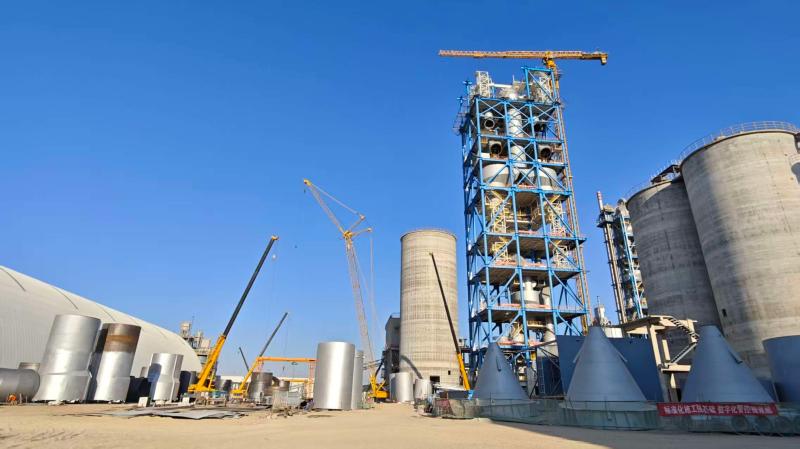
Another major milestone was reached on May 6, 2026, with the completion of the main structural works for a production line designed to process 1.3 million tonnes of coal gangue annually into aluminosilicate-based materials.
The project is designed to become China’s largest single-line coal gangue utilization facility by processing capacity, while also achieving a high level of automation and industry-leading energy performance. Its integrated process design and core equipment configuration represent a significant step forward in the large-scale and efficient utilization of coal-based solid waste.
Once operational, the production line will further demonstrate the technical and commercial viability of converting coal gangue from a long-term environmental liability into a source of value-added materials.
Potential for Wider International Application
The technologies and project experience developed through this partnership also have potential applications beyond China. They may be particularly relevant to coal-producing regions in South and Southeast Asia, Mongolia and Central Asia, Southern Africa, and parts of Eastern Europe, where coal-mining waste and legacy spoil deposits present both environmental challenges and opportunities for resource recovery.
For coal producers and mine operators, the solutions can help reduce the land use, environmental risks and long-term costs associated with waste stockpiling and disposal. For mineral-processing companies and building-materials manufacturers, they can provide a route for converting suitable coal-associated mineral resources into metakaolin, ultrafine kaolin and other aluminosilicate-based materials with commercial applications in glass fiber, cementitious materials and other building-material products.
The project experience covers the full development process, including feedstock characterization, product positioning, process-route development, suspension calcination, ultrafine classification, cascade waste-heat recovery, automated control and industrial-scale engineering.
As coal gangue varies considerably in mineral composition and chemical properties from one region to another, overseas applications require project-specific assessment and process design. Drawing on its engineering and industrial deployment capabilities, HCRDI can develop integrated solutions tailored to local feedstocks, energy conditions, product markets and environmental requirements.
Deepening Cooperation in Green Materials
The projects have strengthened Inner Mongolia Tianhao’s capabilities in solid-waste resource utilization while providing a replicable reference for the large-scale, high-value and energy-efficient use of coal-based solid waste.
Going forward, HCRDI and Inner Mongolia Tianhao will deepen their strategic cooperation in the research, development and industrial application of coal-gangue-based materials. The two companies will continue to expand potential applications, upgrade core technologies and advance the development of large-scale projects.
Through continued innovation and engineering collaboration, the partners aim to deliver further benchmark projects that support more efficient resource use, lower-carbon production and the green transformation of the building materials industry.